Invoices invite customers to sign up for Leverandørservice
If you use Leverandørservice, the automatic collection text now sits above the line items on Alunta's invoice, right after the recipient and sender details. It no longer looks like a line item, so your customer sees the payment method before the amounts.
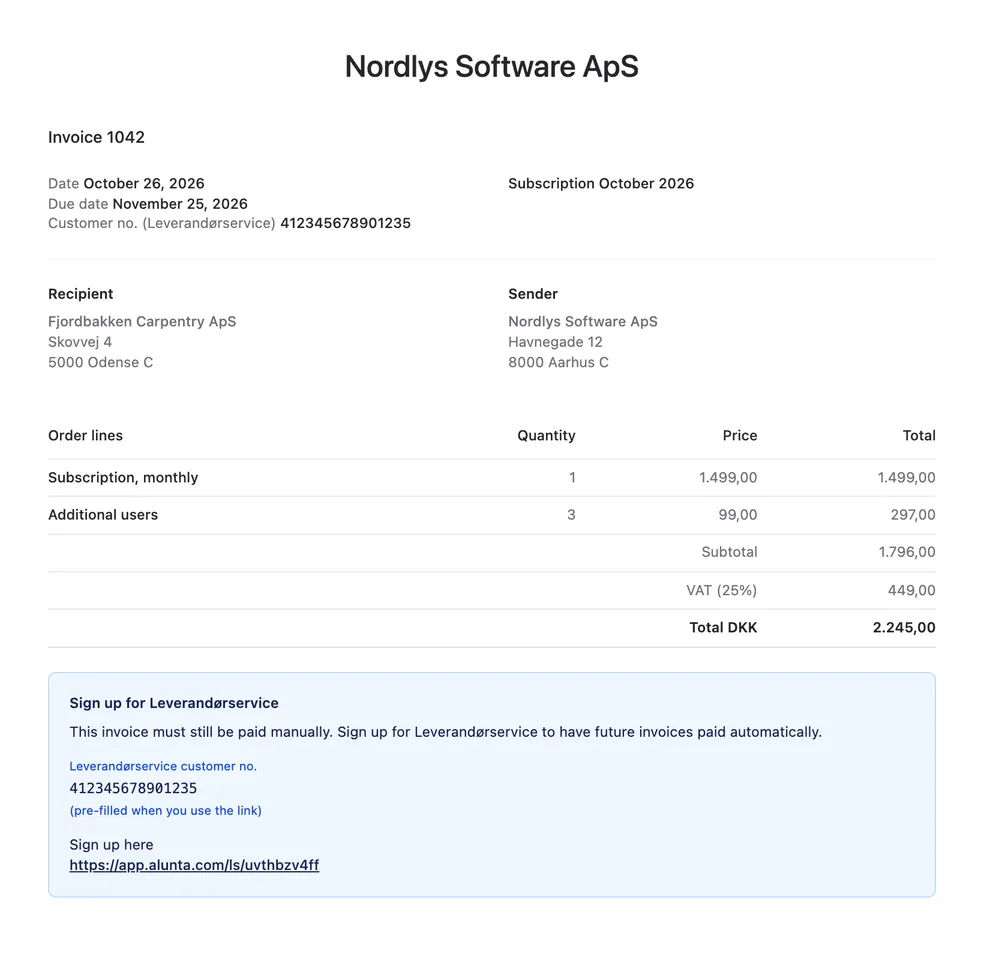
If you use Leverandørservice, the automatic collection text now sits above the line items on Alunta’s invoice, right after the recipient and sender details. It no longer looks like a line item, so your customer sees the payment method before the amounts.
Customers without a mandate get an invitation. If the customer has no active LS mandate, an unpaid invoice in DKK gets a Sign up for Leverandørservice section with a short signup link and the customer’s Leverandørservice customer no. The customer number is pre-filled when the customer uses the link, so the signup is matched to the customer in Alunta. The invoice must still be paid manually, and it says so.
On Alunta’s PDF the section sits below the invoice totals. If you use the PDF from your accounting system, both the collection text and the section are sent along: to e-conomic and Uniconta as text lines after the invoice lines, and to Dinero and Billy in the invoice’s free text. Your own invoice note is still included, and if you use Uniconta’s PDF, the note now appears there too.
The section appears when you have added your Standard LS signup link under Settings → Leverandørservice and LS is not in test mode. It does not appear on credit notes, reminder fees, paid invoices or invoices collected through Betalingsservice. Invoices already booked in your accounting system are not changed there.


The people and AI helpers behind the updates
Bo Møller and Emil Højbjerg are the primary developers behind Alunta. They spend most of their time coding, so they have delegated the wording of these explanations to our AI helpers.
The AI helpers write from the updates we have deployed to the product. Bo and Emil are behind the changes and remain responsible for ensuring the information reflects what was actually released.