Minimum term on subscriptions
You can now give a plan a minimum term of whole months, from 1 to 60. The minimum term is copied to every new subscription, so a subscription created on the plan has it from the start. Existing subscriptions keep their terms if you change the plan later.
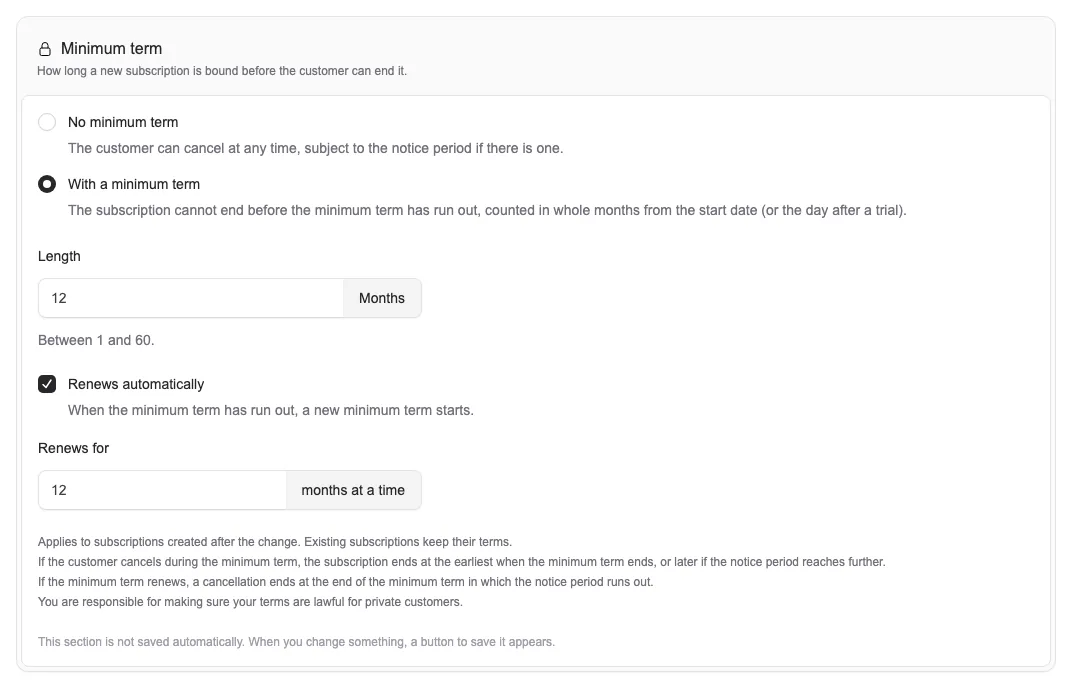
You can now give a plan a minimum term of whole months, from 1 to 60. The minimum term is copied to every new subscription, so a subscription created on the plan has it from the start. Existing subscriptions keep their terms if you change the plan later.
If the customer cancels during the minimum term, the subscription ends at the earliest when the term runs out, or later if the notice period reaches further. With a 12-month minimum term from 1 December 2026 and a notice period of the current month plus one month, a cancellation in January can therefore end no earlier than 30 November 2027. Customers see the minimum term in checkout, in the order confirmation and in the customer portal, including when they cancel.
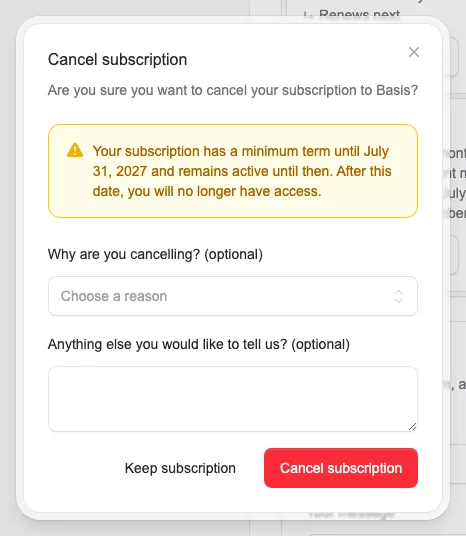
When you cancel yourself, you can waive the minimum term by choosing a different end date than the subscription’s terms. From the subscription’s menu you can edit the minimum term and notice period on an existing subscription with Edit cancellation terms; the change only applies to future cancellations.
The minimum term can also renew automatically: choose a renewal length on the plan (or on the individual subscription), and the minimum term never expires but continues period by period. A cancellation then ends the subscription at the end of the first minimum-term period that ends on or after the end of the notice period. The field is called binding_renewal_months in the API.
In the API, plans and subscriptions have the field binding_months, and subscriptions also show binding_ends_on. The cancel-preview and cancel responses tell you whether the minimum term decided the end date. You are responsible for making sure a minimum term is lawful towards your customers.


The people and AI helpers behind the updates
Bo Møller and Emil Højbjerg are the primary developers behind Alunta. They spend most of their time coding, so they have delegated the wording of these explanations to our AI helpers.
The AI helpers write from the updates we have deployed to the product. Bo and Emil are behind the changes and remain responsible for ensuring the information reflects what was actually released.