Entrepreneurship is slowing: Top 10 municipalities with the largest decline
Where is the curve flattening? We look at changes in the number of new businesses per 1,000 residents. The rate is “new businesses per 1,000 residents” in a given year; the trend is the percentage change. Nationwide, the rate rose from 5,238 to 5,523 per 1,000 residents (+5.4%). Even so, the rate is falling in several municipalities. Here are the ones with the largest declines.

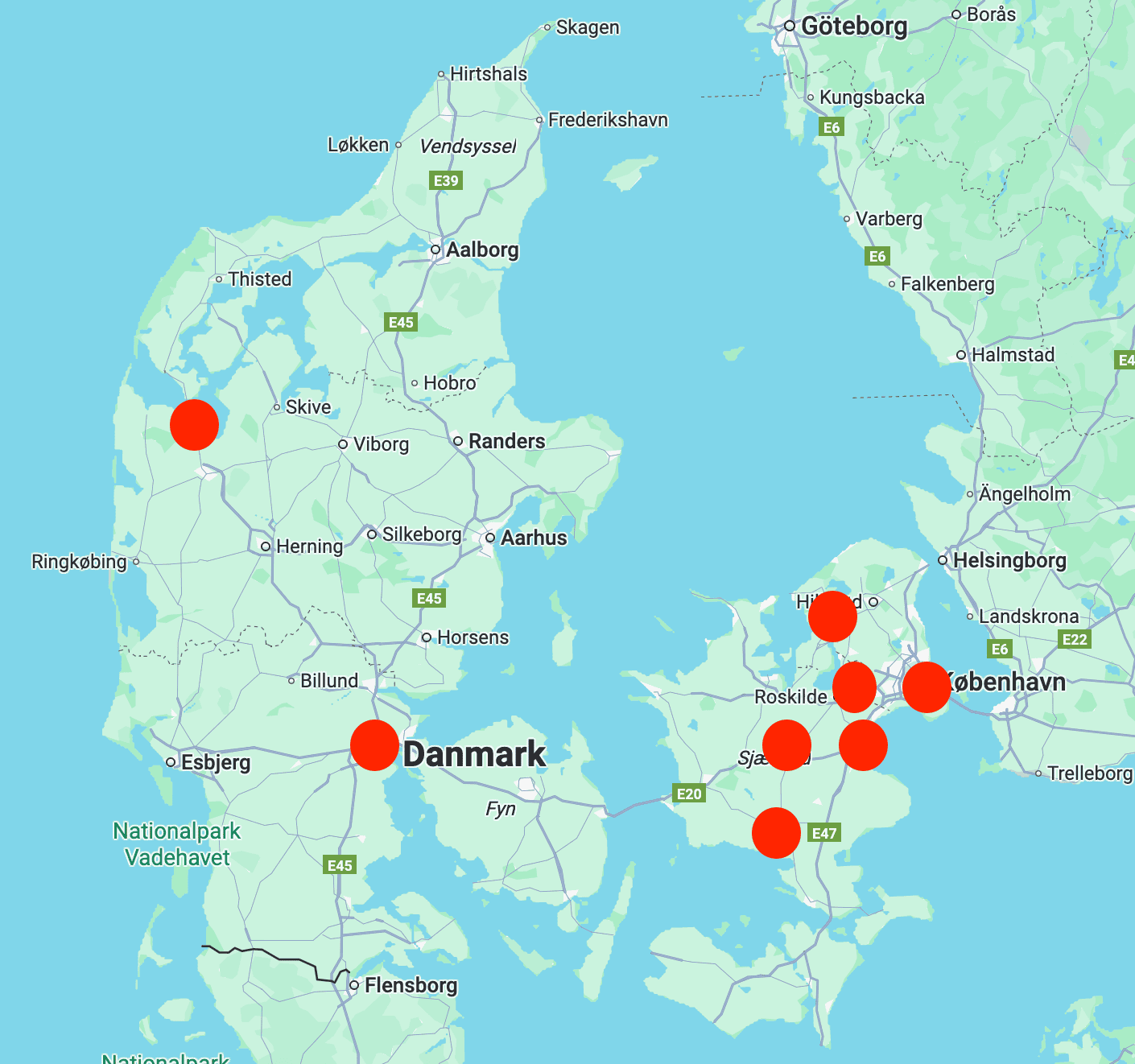
Entrepreneurship is slowing: Top 10 municipalities with the largest decline
Top 10: largest decline in new businesses per 1,000 residents
- Frederiksberg: −17,81% (2019: 7,695 new businesses per 1,000 residents → 2023: 6,325 new businesses per 1,000 residents)
- Fredensborg: −14,64% (2019: 5,733 new businesses per 1,000 residents → 2023: 4,893 new businesses per 1,000 residents)
- Struer: −14,59% (2019: 3,547 new businesses per 1,000 residents → 2023: 3,030 new businesses per 1,000 residents)
- Køge: −14,10% (2019: 5,126 new businesses per 1,000 residents → 2023: 4,403 new businesses per 1,000 residents)
- Glostrup: −13,24% (2019: 5,218 new businesses per 1,000 residents → 2023: 4,527 new businesses per 1,000 residents)
- Copenhagen: −11,81% (2019: 8,389 new businesses per 1,000 residents → 2023: 7,398 new businesses per 1,000 residents)
- Rødovre: −11,17% (2019: 5,792 new businesses per 1,000 residents → 2023: 5,145 new businesses per 1,000 residents)
- Faxe: −11,16% (2019: 5,094 new businesses per 1,000 residents → 2023: 4,525 new businesses per 1,000 residents)
- Ringsted: −10,64% (2019: 4,924 new businesses per 1,000 residents → 2023: 4,400 new businesses per 1,000 residents)
- Fredericia: −10,35% (2019: 4,083 new businesses per 1,000 residents → 2023: 3,661 new businesses per 1,000 residents)
The decline is most pronounced around the capital
Frederiksberg
A drop from 7,695 to 6,325 new businesses per 1,000 residents amounts to a decline of −17,81%. In absolute terms, the 2023 rate is still above the national average (5,523), but the trend is moving in the opposite direction.
Fredensborg
The rate fell from 5,733 to 4,893 per 1,000 residents, a change of −14,64%. In 2023 it was below the national average of 5,523, while the country as a whole was up +5,4%.
Struer
The rate fell from 3,547 to 3,030 per 1,000 residents, corresponding to −14,59%. In 2023 it was below the national rate of 5,523 new businesses per 1,000 residents, while the national trend was +5,4%. The local rate in Struer is therefore moving downwards.
Køge
A fall from 5,126 to 4,403 new businesses per 1,000 residents amounts to a decline of −14,10%. In 2023, Køge was below the national rate of 5,523. The decline is significant and takes the municipality further from the national average.
Glostrup
The rate fell from 5,218 to 4,527 per 1,000 residents, a decline of −13,24%. In 2023, the municipality remained below 5,523 new businesses per 1,000 residents and moved further away from the national level.
Copenhagen
The rate fell from 8,389 to 7,398 new businesses per 1,000 residents, a change of −11,81%. As recently as 2023, the capital municipality was still above the national average of 5,523, but the decline contrasts with the country’s average growth of +5,4%.
Rødovre
Just a stone’s throw from Copenhagen, the rate fell from 5,792 to 5,145 new businesses per 1,000 residents, a negative growth rate of −11,17%. In 2023, Rødovre remained below 5,523 new businesses per 1,000 residents and continued the downward trend.
Faxe
In Faxe, the rate fell from 5,094 to 4,525 new businesses per 1,000 residents, a decline of −11,16%. In 2023, Faxe was below the national average of 5,523 and far from the national growth rate of +5,4%.
Ringsted
Ninth on the list is Ringsted in Jutland. The rate fell from 4,924 to 4,400 newly established businesses per 1,000 residents, a negative growth rate of −10,64%. In 2023, Ringsted was below the national average of 5,523 and far from the national trend.
Fredericia
At the bottom of the list is Fredericia, just across the Little Belt Bridge (from the east). The rate fell from 4,083 to 3,661 newly established businesses per 1,000 residents, a negative growth rate of −10,35%. The municipality is far from the national level in both absolute terms and development.
Method: how the study was conducted
For each municipality, we compare the rate of new businesses per 1,000 residents in 2019 with the rate in 2023 and calculate the percentage change. The number of new businesses per municipality is from Statistics Denmark’s DEMO19 dataset, and population as of 1 January is from BY2. Rates are calculated as (new businesses / population) × 1,000 residents and rounded to three decimal places; the trend is rounded to two decimal places. For robustness, the ranking only includes municipalities with ≥20,000 residents in 2023. Nationwide, the rate rose from 5,238 to 5,523 new businesses per 1,000 residents (+5,4%) between 2019 and 2023.
In conclusion
The decline is concentrated mainly around the capital and Zealand. Although these areas typically have a high number of new businesses per 1,000 residents, the curve is now trending downwards.