Product update from Alunta
Tier-based subscriptions
Create subscription types where the price automatically adjusts based on how the customer uses your product. You can now define tiers with ranges across up to 3 parameters (e.g. number of users, number of URLs, MRR) and let the system place the customer on the correct tier automatically.
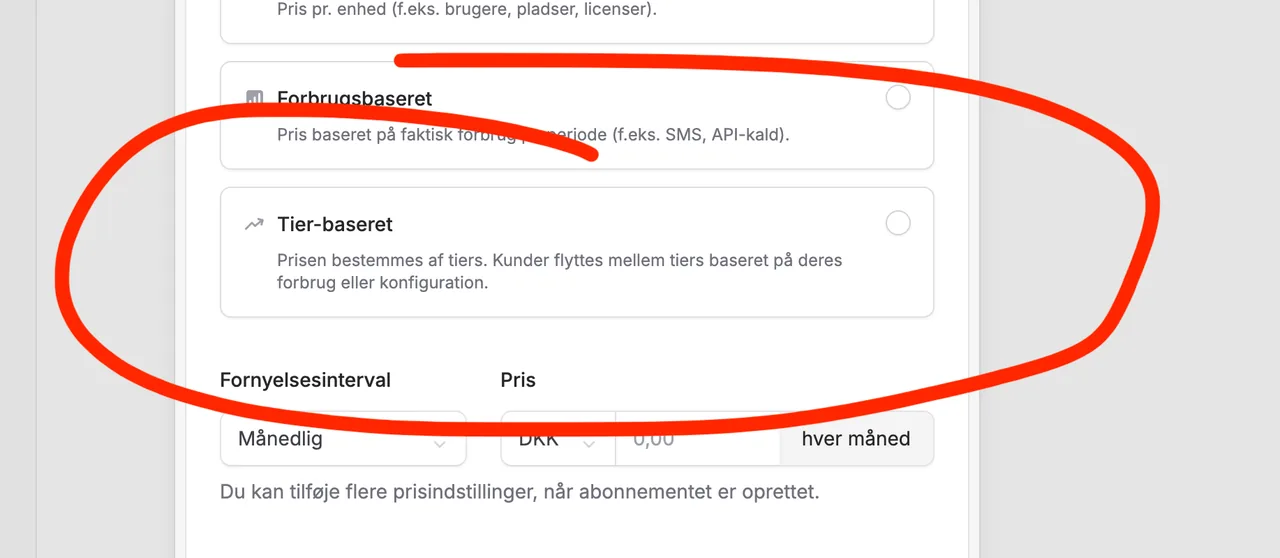
Create subscription types where the price automatically adjusts based on how the customer uses your product. You can now define tiers with ranges across up to 3 parameters (e.g. number of users, number of URLs, MRR) and let the system place the customer on the correct tier automatically.
How it works
- Create a new subscription type and choose Tiered as the pricing type.
- On the detail page, configure your parameters (e.g. “Number of users”), tiers (e.g. Starter, Growth, Pro) and prices per tier.
- When a customer matches multiple tiers, the highest one wins.
- New subscriptions start on the lowest tier automatically.
Report usage via API or UI
- API:
POST /v1/subscriptions/{uuid}/tier-parameterswith the current parameter values. - UI: Open a subscription and choose “Update parameters” to report values manually.
- The tier is evaluated automatically and the price is updated.
Upgrade and downgrade behavior
Per subscription type you choose how changes are handled:
- Upgrade: Immediately (with proration) or on the next billing period.
- Downgrade: Manual or automatic on the next period.
Lock a customer on a specific tier
Use “Override tier” to manually place a customer on a specific tier. The tier is locked so that API reports cannot change it again — until you unlock it.


Meet the developers behind Alunta
Bo Møller and Emil Højbjerg are the primary developers behind Alunta. We use AI and specialised agents to research, build and test changes – but the final decisions and responsibility remain ours.
Every changelog is sent automatically from Alunta to this page, so anyone can follow how the product develops – even without logging in or having an Alunta account.
Explore the technology behind Alunta